
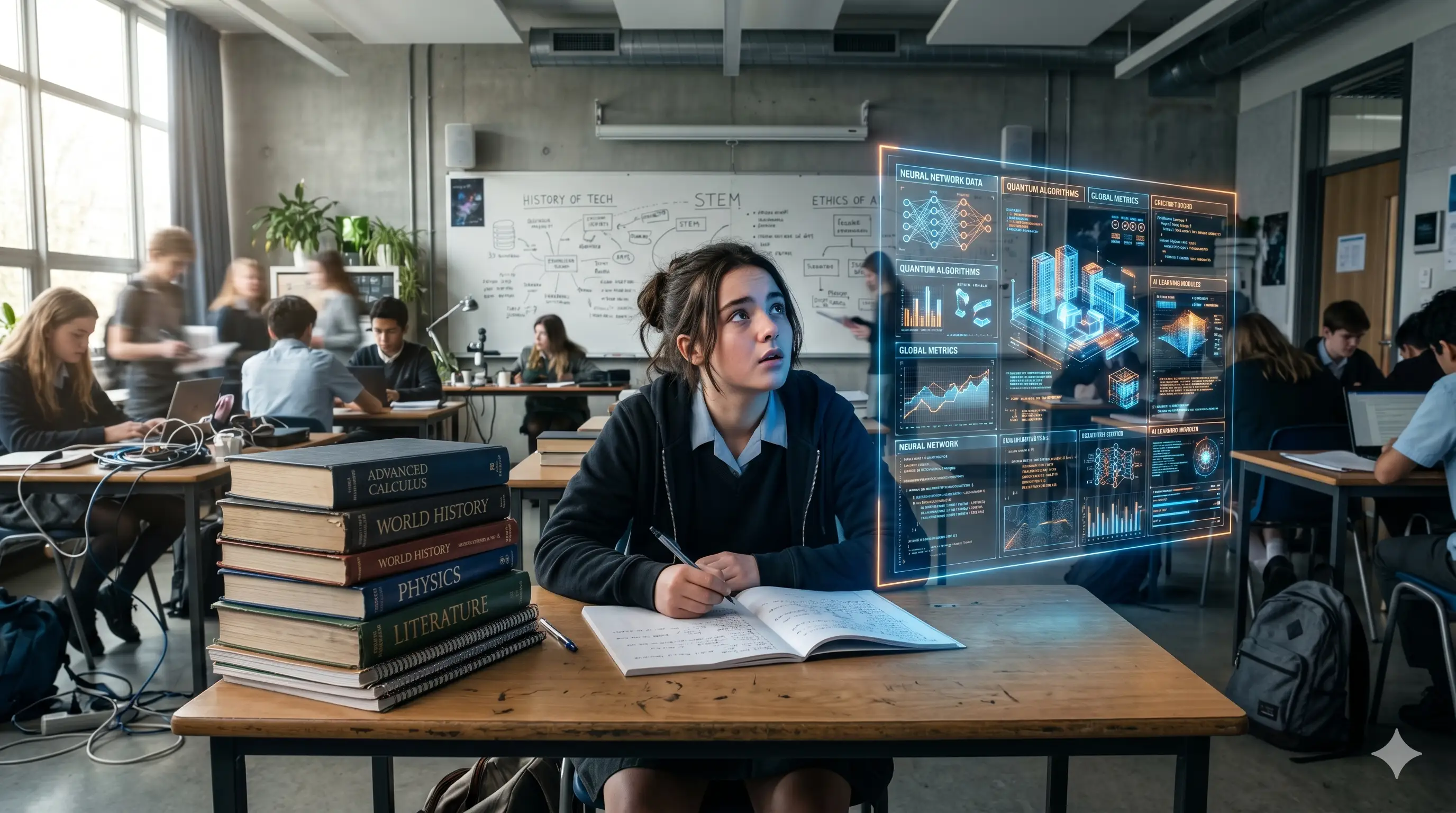
7 Critical Problems in Modern School Education Today
Education is the cornerstone of any thriving society. It is the bridge between a child’s potential and their future success. However, in this rapidly evolving digital era, a disturbing question arises: Is our school education system keeping up?
While technology has transformed industries overnight, many classrooms across the globe look surprisingly similar to how they did decades ago. The mismatch between what the world needs and what schools are teaching is creating significant friction.
In this article, we dive deep into the most critical school education problems in the current scenario and discuss why urgent adaptation is necessary.
1. The Rote Learning Trap vs. Critical Thinking
Perhaps the most significant hurdle in traditional education is the continued reliance on memorization, often called rote learning. Students are trained to pass exams by regurgitating facts, rather than understanding concepts.
In the current information age, facts are available at the click of a button (or a chat with an AI). What the world needs now are individuals who can analyze, critique, and synthesize that information to solve complex problems. When the focus remains solely on grades, true learning takes a backseat.
2. Outdated Curriculum in a High-Tech World
The world is moving at lightning speed. Industries like Artificial Intelligence, data science, and biotechnology are shaping the future job market. Yet, many school curriculums are still grounded in 20th-century requirements.
Teaching children what to think instead of how to think is a recipe for irrelevance. A modern curriculum must integrate digital literacy, coding, financial management, and emotional intelligence alongside traditional subjects to prepare students for the real world.
3. Ignoring the Mental Health Crisis
Academic pressure has reached unprecedented levels. The constant race to be at the top, coupled with the pervasive influence of social media, has created a mental health crisis among students. Anxiety, depression, and burnout are becoming alarmingly common in school-going children.
Historically, schools have focused purely on academic output. Today, ignoring emotional well-being is impossible. A modern school must prioritize mental health support, creating safe spaces for students to express their struggles without fear of judgment.
4. The Digital Divide and Technology Integration Gaps
While premier institutions are adopting VR labs and AI tutors, a vast majority of schools lack basic digital infrastructure. This "digital divide" creates unequal opportunities.
Furthermore, even in schools with technology, there is often a gap in how it is used. Simply placing tablets in a classroom is not enough. Effective technology integration requires trained teachers who know how to use digital tools to enhance pedagogy, not just replace a textbook with a screen.
5. One-Size-Fits-All Teaching Model
Every child is unique. They have different learning speeds, strengths, and interests. However, the traditional industrial model of education treats students like products on an assembly line, expecting everyone to learn the same thing, the same way, at the same time.
This approach crushes creativity. Progressive schools are moving towards personalized learning, where technology and data help tailor the educational experience to the individual child's needs.
6. Overemphasis on Standardized Testing
"Teaching to the test" has become a norm. When standardized tests are the only metric for success, curriculums narrow down. Essential subjects like art, music, drama, and sports—which foster creativity and teamwork—are often sidelined because they aren't on the test.
Standardized tests offer a snapshot of memory recall on a specific day; they do not measure a student’s true potential, resilience, or innovative capabilities.
7. The Disconnect Between Home and School
For a child to thrive, there must be a strong partnership between parents and teachers. Often, in the current scenario, communication is limited to parent-teacher meetings only when a problem arises.
When parents are not involved in the learning process, or when schools fail to communicate their educational philosophy effectively, the child receives mixed signals. Continuous, transparent collaboration is essential for holistic development.
Conclusion: The Road Ahead
Acknowledging these problems is the first step toward change. The education system is not a static entity; it must evolve just as human society evolves. We need to shift the focus from grades to growth, from memorization to mastery, and from conformity to creativity.
Progressive institutions like Oxford Lyceum are already taking strides to bridge these gaps by focusing on holistic, modernized, and technologically integrated education that prepares students for the challenges of tomorrow, not yesterday.
What do you think is the biggest problem in education today? Share your thoughts in the comments below.
Comments & Reviews
Leave a Reply
Ali Raza
2 days agoThis is a fantastic and highly informative article! Looking forward to more content like this.